
35% vs 20% Window Tint: What's the Difference?
If you're choosing automotive window tint in Western Australia, you've probably come across two numbers again and again: 35% and 20% VLT. But what do they actually mean, which one is darker, and where can each be used?

Is 20% tint darker than 35% tint?
Yes. A 20% VLT result is darker than a 35% VLT result because it allows less visible light through the glass.
In Western Australia, passenger-vehicle windows forward of the B-pillar must maintain at least 35% VLT. Windows behind the B-pillar may generally be down to 20% VLT where compliant external rear-view mirrors are fitted.
Importantly, VLT refers to the final combination of the vehicle glass and tint film — not simply the percentage printed on the film box.
First, what does VLT actually mean?
VLT stands for Visible Light Transmission. It describes the percentage of visible light that is able to pass through the vehicle's glass and tint.
35% VLT
Allows approximately 35% of available visible light through the combined glazing and film. It appears lighter than a 20% VLT result.
20% VLT
Allows approximately 20% of available visible light through the combined glazing and film, creating a noticeably darker appearance.
Where can 35% and 20% tint be used in WA?
Western Australia's window-tinting requirements distinguish between glazing located forward of the B-pillar and glazing located behind the B-pillar.
For passenger vehicles, windows forward of the B-pillar must maintain a VLT of at least 35%. This typically includes the front driver's and front passenger's side windows.
Passenger-vehicle windows behind the B-pillar may generally have a minimum VLT of 20%, provided external rear-view mirrors complying with the applicable requirements are fitted on both sides of the vehicle.
Forward of B-pillar: minimum 35% VLT.
Behind B-pillar: minimum 20% VLT for qualifying passenger vehicles.
Requirements referenced from the Government of Western Australia Department of Transport and Major Infrastructure Window Tinting Information Bulletin IB-119D.
View Transport WA Guidance ↗35% vs 20% window tint.
Lighter
Noticeably darker
More light enters
Less light enters
Front side windows
Rear of B-pillar
Moderate
Greater
Generally lighter view
Darker view
Depends on film technology
Depends on film technology
Does darker tint mean better heat rejection?
Not necessarily — and this is one of the most important points when choosing automotive window tint.
VLT tells you how much visible light passes through the glass. It does not, by itself, tell you how effectively a film manages solar heat.
Film construction and technology play a major role in its overall performance. A premium ceramic film may provide strong solar performance while maintaining a relatively light appearance.
This is why we don't recommend choosing window tint purely by looking for the darkest option available. At Beauty & Beast, we consider the desired appearance, cabin comfort, visibility, existing glass and the way the vehicle will actually be used.
Darkness and performance are two different things.
Choose the film technology first, then select an appropriate shade for the vehicle and its glazing.
What if your vehicle already has privacy glass?
Many new SUVs, four-wheel drives and dual-cab vehicles arrive from the factory with darkened rear privacy glass.
This creates two important considerations.
Privacy glass is already dark
The existing rear glass may already transmit significantly less visible light than the clear front glass, so any additional film needs to be selected with the final VLT in mind.
Dark glass isn't automatically high-performance film
Factory privacy glass provides privacy and appearance, but it should not automatically be assumed to deliver the same solar performance as a premium automotive window film.
This means simply saying, "I'll put 20% film on the rear" isn't always the right approach. Because VLT is measured through the combined glass and film, existing privacy glass must be taken into consideration.
So which tint is right for your vehicle?
There isn't one correct tint shade for every vehicle. A good recommendation should take the vehicle itself and the driver's priorities into account.
Consider the existing glass
Clear glass and factory privacy glass behave differently once film is added. The existing glass should be part of the decision.
Consider the appearance
Some owners want the front and rear glass to look as consistent as possible, while others prefer a lighter appearance.
Consider visibility
A darker appearance also means less visible light passes through the glass, which is worth considering for night-time driving.
Consider film performance
Heat rejection, UV performance, optical clarity and long-term durability can matter considerably more than simply selecting the darkest tint.
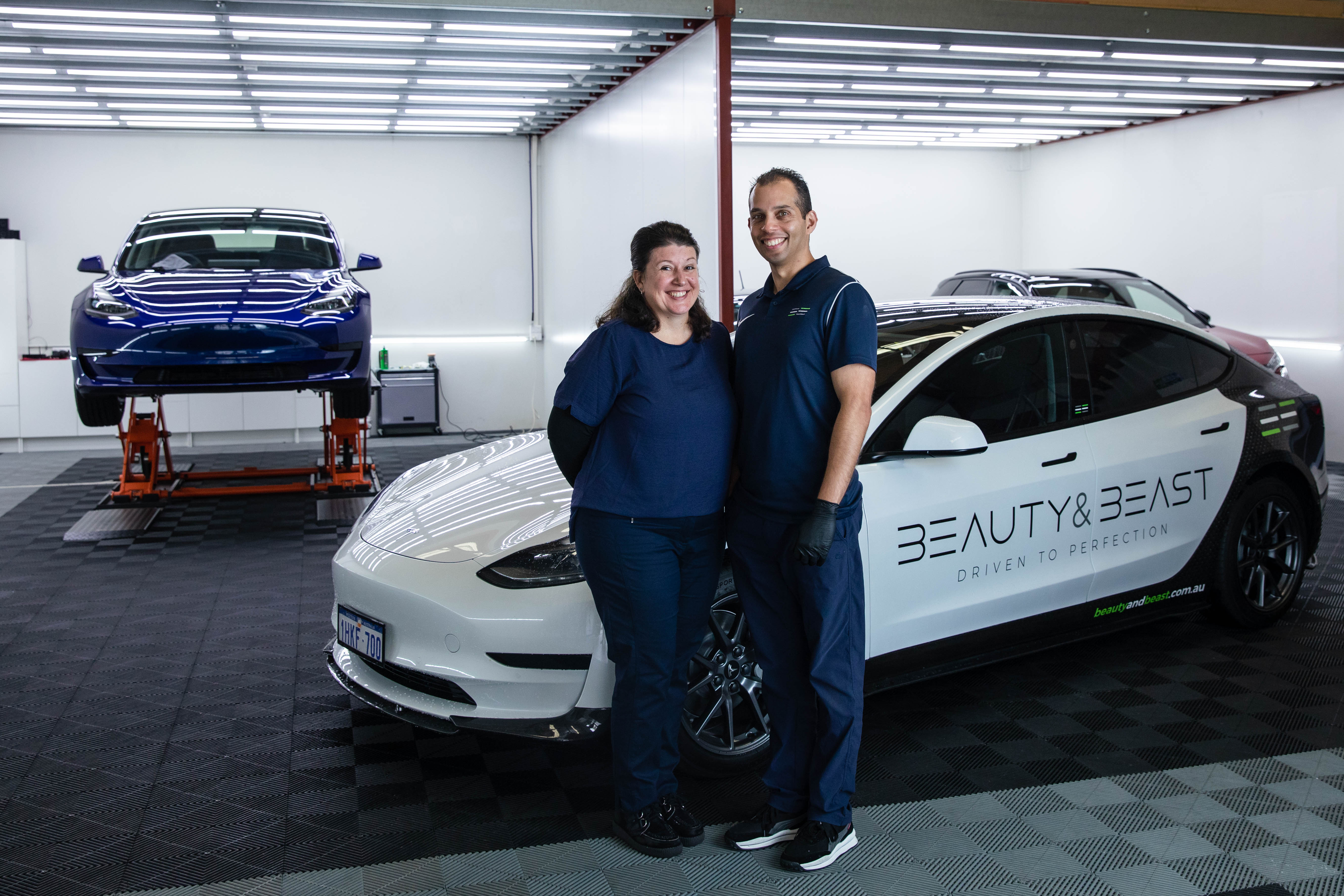
Tinting from a dedicated vehicle protection studio.
Beauty & Beast operates from our clean, modern, climate-controlled automotive protection workshop in Bayswater, Perth.
Window tinting forms part of our wider approach to vehicle protection alongside Paint Protection Film, ceramic coatings and interior protection.
If you're unsure whether 35%, 20% or another film specification is appropriate for your vehicle, we can review the existing glass and talk through the result you're trying to achieve.
Explore Window Tinting →35% & 20% Tint FAQs.
01 Is 20% window tint darker than 35%?
Yes. 20% VLT allows less visible light through the glazing than 35% VLT, so the result appears darker.
02 Can I use 20% tint on my front side windows in WA?
Under current WA guidance, windows forward of the B-pillar must maintain at least 35% VLT. A 20% VLT result therefore does not meet that requirement for those windows.
03 Can rear windows be 20% in Western Australia?
Passenger-vehicle windows behind the B-pillar may generally be down to 20% VLT where compliant external rear-view mirrors are fitted on both sides of the vehicle.
04 Does 20% tint reject more heat than 35%?
Not automatically. VLT measures visible light transmission rather than overall solar performance. Film technology and construction are major factors in determining heat rejection.
05 Can tint be added over factory privacy glass?
Additional film can often be applied to factory privacy glass, but the existing glass affects the final VLT. The combined result needs to be considered before selecting a film.
06 Is 35% tint difficult to see through at night?
35% VLT allows more visible light through than 20% VLT and therefore gives a lighter view. Real-world visibility will also depend on surrounding lighting, the vehicle's glazing and the film itself.
35% vs 20% window tint: the simple version.
20% VLT is darker than 35% VLT. For passenger vehicles in Western Australia, glazing forward of the B-pillar must maintain at least 35% VLT, while qualifying rear glazing behind the B-pillar may generally be down to 20%.
The percentage is only one part of choosing a window film. Existing privacy glass, visibility, appearance, film technology and solar performance should all be considered.
If you'd like help choosing the right tint for your vehicle, Beauty & Beast provides professional automotive window tinting from our Bayswater vehicle protection studio.
