
Factory Privacy Glass vs Window Tint.
What's the difference — and do you still need window film?
Many new SUVs, 4WDs and dual-cab vehicles already have dark rear windows from the factory. So if the glass already looks tinted, it's reasonable to ask: what's the point of adding window film?

Is factory privacy glass the same as window tint?
No. Factory privacy glass and aftermarket automotive window film are not the same thing.
Privacy glass is darkened glazing manufactured as part of the vehicle. Automotive tint is a separate film professionally applied to the glass and can be engineered to provide additional solar, UV, glare and comfort performance.
Most importantly, how dark glass looks does not tell you how well it performs against solar heat or UV radiation. Those characteristics depend on the specification of the particular glass and film.
This is why two windows can look almost identical in darkness but perform very differently when exposed to Perth's sun.
What is factory privacy glass?
Factory privacy glass is darkened vehicle glazing fitted by the manufacturer. It is particularly common on rear passenger windows and rear glass in modern SUVs, four-wheel drives and dual-cab vehicles.
Unlike aftermarket tint, the darker appearance is part of the glazing itself rather than a separate window film that has been applied after the vehicle was manufactured.
Its most obvious benefits are privacy and appearance. From outside the vehicle, the cabin is less visible and the dark rear glass often complements the styling of modern vehicles.
What cannot be determined simply by looking at the glass is its level of solar heat rejection or UV performance. Those properties vary according to the specification of the vehicle's factory glass.
Dark glass describes appearance — not necessarily performance.
If heat and UV performance matter to you, the actual glazing specification and any window film being considered are more useful than judging the glass by darkness alone.
So what does window tint add?
Automotive window tint is a thin film installed onto the vehicle's glass. Modern premium films are engineered to do considerably more than simply make the windows darker.
Depending on the film selected, automotive tint can help manage solar energy entering the cabin, reduce UV transmission, control glare, improve privacy and create a more consistent appearance across the vehicle.
This distinction becomes particularly useful on vehicles with factory privacy glass. You may already like how dark the rear windows look but still want the additional performance provided by a quality automotive film.
Solar Performance
Quality window film can help reduce solar energy entering through the glass, improving cabin comfort in hot conditions.
UV Protection
Premium automotive films can provide very high levels of UV protection, depending on the product selected.
Glare Control
Tinting can help reduce harsh sunlight and glare entering through side and rear glazing.
Appearance
The correct film can help create a more balanced appearance between lighter front glass and darker factory rear glass.
Privacy glass vs automotive window film.
Although they can look similar from outside the vehicle, factory privacy glass and automotive window film serve different purposes.
Part of the factory glazing
Film applied to the existing glass
Yes
Available in different shades
Yes
Depends on film shade
Depends on factory glass specification
Engineered performance varies by film
Depends on glass specification
High UV protection available
Additional film may be considered
Select film to suit desired performance
Determined by the factory glass
Combined result of glass + film
“My rear windows are already dark. Why would I add film?”
This is probably the most common question surrounding factory privacy glass — and it's a sensible one.
If you are completely happy with the appearance and performance of the existing glass, there may be no reason to change it purely for the sake of making it darker.
The reason additional film can still make sense is that film can be selected for performance rather than simply darkness.
For example, a relatively light high-performance film may be considered over already-dark rear privacy glass where the objective is additional solar or UV performance without substantially changing the appearance.
The best option depends on the vehicle's existing glazing, the film specification and the final VLT result.
Can you make the front windows match factory privacy glass?
Many new vehicles arrive with relatively clear front side windows and significantly darker rear privacy glass. This can make the glazing appear visually unbalanced when viewed from the side.
Tinting the front side windows can help create a more consistent overall appearance, but the goal should not simply be to make every pane of glass identical.
Western Australian VLT requirements still apply. Windows forward of the B-pillar must maintain at least 35% VLT, so some factory privacy glass will naturally remain darker than the legally permissible result on the front side windows.
In those cases, the objective is usually a more cohesive appearance, rather than a perfect shade match.
Read our guide: 35% vs 20% Window Tint →What about VLT and factory privacy glass?
In Western Australia, all glazing forward of the B-pillar must maintain at least 35% VLT.
For qualifying passenger vehicles, glazing behind the B-pillar may generally be down to 20% VLT where compliant external rear-view mirrors are fitted.
Some vehicles leave the factory with rear privacy glass already darker than 20%. This makes the existing glazing particularly important when considering additional film.
Where do we commonly see factory privacy glass?
Dark factory rear glazing has become extremely common across modern passenger vehicles, particularly larger vehicles.
SUVs
Many modern SUVs use darker rear glazing for privacy and styling while retaining lighter front side windows.
4WDs
Larger four-wheel drives often have substantial rear glass areas, making cabin solar performance particularly relevant in Perth conditions.
Dual-Cab Utes
Privacy glass is increasingly common in dual-cab vehicles, particularly higher-specification variants.
Family Vehicles
Rear privacy glass is common in vehicles carrying children and passengers, where comfort and cabin protection may also be important considerations.
How should film be selected for privacy glass?
We don't think window film should be selected solely by choosing a percentage from a chart.
Before recommending a solution, it makes sense to consider the vehicle's existing glazing, which windows already contain privacy glass, how the vehicle is used and what the owner actually wants to improve.
Assess Existing Glass
Understand where privacy glass is fitted and how dark the vehicle already is.
Identify Your Priority
Heat rejection, UV performance, privacy, appearance and visibility may carry different importance for each owner.
Select The Film
Choose film technology and shade suited to the vehicle rather than automatically selecting the darkest option.
Consider Final VLT
The existing glass and film work together, so the final combined VLT needs to be considered.
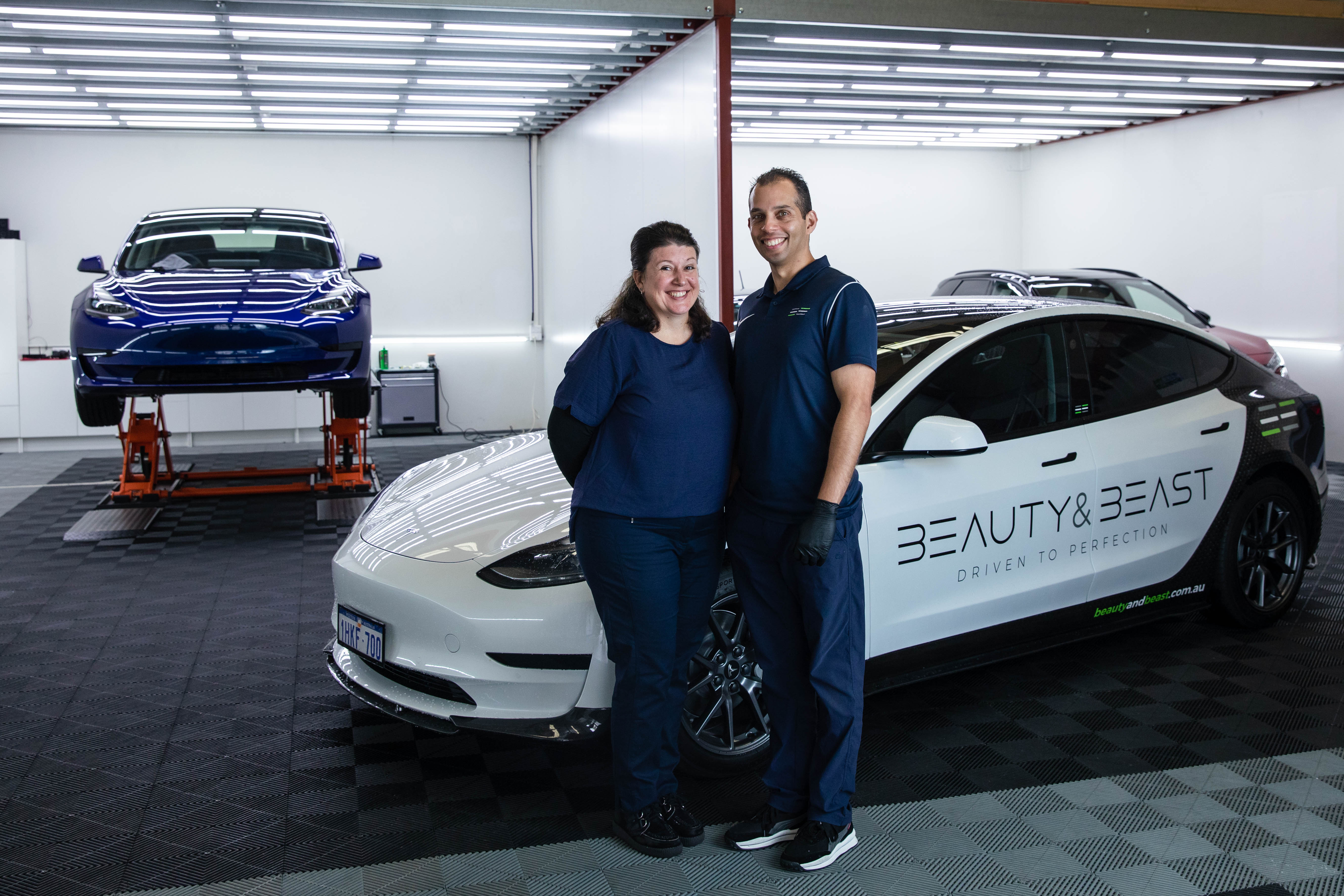
Window tinting from a vehicle protection studio.
Beauty & Beast provides professional automotive window tinting from our clean, modern, climate-controlled vehicle protection studio in Bayswater, Perth.
Because window tinting sits alongside our Paint Protection Film, ceramic coating and interior protection services, we approach it as part of protecting the vehicle as a whole — rather than simply making the glass darker.
Explore Window Tinting →Privacy Glass & Tint FAQs.
01 Is privacy glass the same as window tint?
No. Factory privacy glass is darkened glazing fitted as part of the vehicle, while automotive window tint is a separate film applied to the glass.
02 Does factory privacy glass block heat?
Its solar performance depends on the specification of the particular factory glass. A dark appearance alone does not tell you how much solar energy the glazing rejects.
03 Does privacy glass block UV?
UV performance varies between different types of vehicle glazing. If UV protection is a priority, the specification of the existing glass and selected window film should be considered rather than relying on darkness alone.
04 Can window tint be applied over factory privacy glass?
In many cases, additional automotive film can be applied to factory privacy glass. The existing glass must be considered because it affects the final combined VLT, and relevant Western Australian vehicle requirements still apply.
05 Will film over privacy glass make the rear windows much darker?
That depends on the film selected. A lighter performance film may add solar and UV benefits without changing the appearance as dramatically as a darker film.
06 Can I make my front windows exactly match the rear privacy glass?
Not always. Factory rear privacy glass can be considerably darker than the minimum VLT permitted on glazing forward of the B-pillar. Tint can often create a more cohesive appearance without necessarily producing an exact match.
07 Is darker tint always better for Perth heat?
No. Darkness and solar performance are different characteristics. Premium film technology can provide strong heat rejection without relying solely on very dark glass.
Privacy glass and window tint aren't the same thing.
Factory privacy glass provides a darker appearance and additional privacy, but its solar and UV performance depends on the specification of the glass.
Premium automotive window film is a separate product that can be selected to improve solar performance, UV protection, glare control and privacy while complementing the appearance of the vehicle.
If your SUV, 4WD or dual-cab already has dark rear glass, that doesn't automatically mean you need darker tint. The better question is what do you want the glass to do?
