
Ceramic Window Tint vs Standard Tint.
What's the difference — and is ceramic tint worth choosing?
Two window films can look almost identical from outside the vehicle and yet perform very differently in the sun. The reason is simple: window tint isn't just about darkness — the technology inside the film matters.

Is ceramic window tint better than standard tint?
For drivers prioritising solar performance, cabin comfort, optical clarity and long-term quality, premium ceramic film is generally the more advanced option.
Ceramic window film uses ceramic-based technology to help manage solar energy and infrared heat without relying on metallic layers. This means strong performance can be achieved without simply making the glass extremely dark.
However, the term “standard tint” is not one technical film type. It may refer to dyed, carbon, hybrid or other conventional films, and their performance can vary considerably.
The best comparison is therefore not simply ceramic vs non-ceramic. Compare the actual performance specifications of the films being offered.
What does “standard window tint” actually mean?
This is where window tint comparisons can become confusing. “Standard tint” isn't a recognised single type of film.
An installer may use the term to describe a more basic dyed film, a carbon-based film, a hybrid film or simply the entry-level option within their particular product range.
That means two businesses advertising “standard tint” may actually be offering very different products.
Some conventional films are designed primarily around appearance, privacy and glare reduction. Others can offer meaningful solar performance as well.
Don't compare tint using the product category alone.
Ask what film is actually being installed and compare its VLT, solar performance, UV protection, construction and warranty.
What is ceramic window tint?
Ceramic automotive window film incorporates ceramic technology into the film construction to provide enhanced solar performance.
Unlike films that depend on a metallic layer, ceramic films can be designed to provide strong heat rejection while remaining non-metallic.
This is particularly relevant for modern vehicles containing GPS, mobile connectivity, Bluetooth, satellite navigation and other electronic systems.
The other significant benefit is that ceramic technology can provide impressive solar performance without requiring an extremely dark tint.
Visible light can still pass through according to the selected VLT.
Ceramic technology is engineered to manage solar and infrared energy.
Non-metallic construction avoids the signal concerns associated with some metallic films.
Ceramic tint vs conventional window film.
The exact result depends on the specific products being compared, but these are the key characteristics worth considering.
Varies — dyed, carbon, hybrid or other construction
Ceramic-based technology
Varies significantly by product
Generally designed for stronger solar performance
Depends on film construction
A major focus of premium ceramic films
Varies by product
High UV protection available
Varies by film quality
Premium films designed for high clarity
Depends on whether metallic layers are used
Non-metallic ceramic films avoid metallic interference
Multiple shades available
Multiple shades available
Entry-level options usually cost less
Premium technology generally costs more
Depends on product and budget
Owners prioritising comfort and premium performance
Film categories alone do not guarantee performance. Always compare the specifications of the exact product being considered.
Does darker window tint reject more heat?
Not necessarily.
The darkness of automotive window tint is described using Visible Light Transmission, or VLT. A lower VLT result means less visible light passes through the glass, so the window appears darker.
But VLT is not a direct measurement of total solar performance.
This is one of the reasons ceramic film is attractive. A premium ceramic film can be designed to manage significant solar and infrared energy even at relatively light VLT levels.
What should you actually look for in a window film?
Marketing percentages can be confusing. These are the specifications that give you a more useful picture of how a film performs.
Visible Light Transmission
Tells you how much visible light passes through the filmed glass. This primarily relates to tint darkness and visibility.
Total Solar Energy Rejected
Measures the proportion of total solar energy rejected by the filmed glazing and can provide a broader indication of solar performance.
Infrared Performance
Indicates how the film performs against infrared energy. Check how the manufacturer has measured and reported the figure when comparing products.
UV Rejection
Indicates the proportion of ultraviolet radiation rejected by the filmed glass. Performance varies between products.
Don't compare infrared percentages in isolation. Different manufacturers may use different wavelength ranges and testing methods. Looking at the complete film specification is more useful than choosing the biggest marketing number.
Why consider ceramic window tint in Perth?
Perth drivers spend a considerable amount of time dealing with strong sunlight and warm conditions, so cabin comfort is often one of the main reasons customers consider automotive window tint.
In this environment, choosing tint purely for appearance can mean missing one of the most useful benefits window film can provide: solar performance.
Premium ceramic film gives vehicle owners the opportunity to prioritise heat management while still choosing a tint shade that suits the vehicle's appearance and applicable Western Australian requirements.
Cabin Comfort
Reduce the solar energy entering through the vehicle's glass and improve comfort for the driver and passengers.
Large Glass Areas
Modern SUVs, EVs and passenger vehicles can have substantial glass areas, increasing the importance of film performance.
Everyday Driving
Solar and glare performance can matter whether the vehicle is parked outside, commuting daily or travelling longer distances.
What if your vehicle already has privacy glass?
Many SUVs, four-wheel drives and dual-cab vehicles already have dark rear privacy glass.
In that situation, you may not necessarily need additional film simply to make the rear windows darker.
A performance film may instead be considered because of what it can add in terms of solar or UV performance.
The important consideration is that existing privacy glass affects the final VLT when additional film is installed, so the vehicle's existing glazing needs to be considered before selecting a shade.
Read: Factory Privacy Glass vs Window Tint →Which option makes sense for your vehicle?
The answer depends on what you expect your window film to do.
Appearance & Privacy
If your main priority is simply changing the appearance of the vehicle or increasing privacy, there may be several film technologies capable of achieving that result.
Heat & Comfort
If reducing the effect of solar heat entering the cabin is important, comparing high-performance ceramic film options becomes much more relevant.
Modern Vehicle Technology
Non-metallic ceramic films are particularly attractive for modern vehicles where electronic connectivity and signal compatibility are important.
Premium Long-Term Result
Owners wanting a premium film with strong clarity, performance and long-term appearance will often find ceramic technology the better fit.
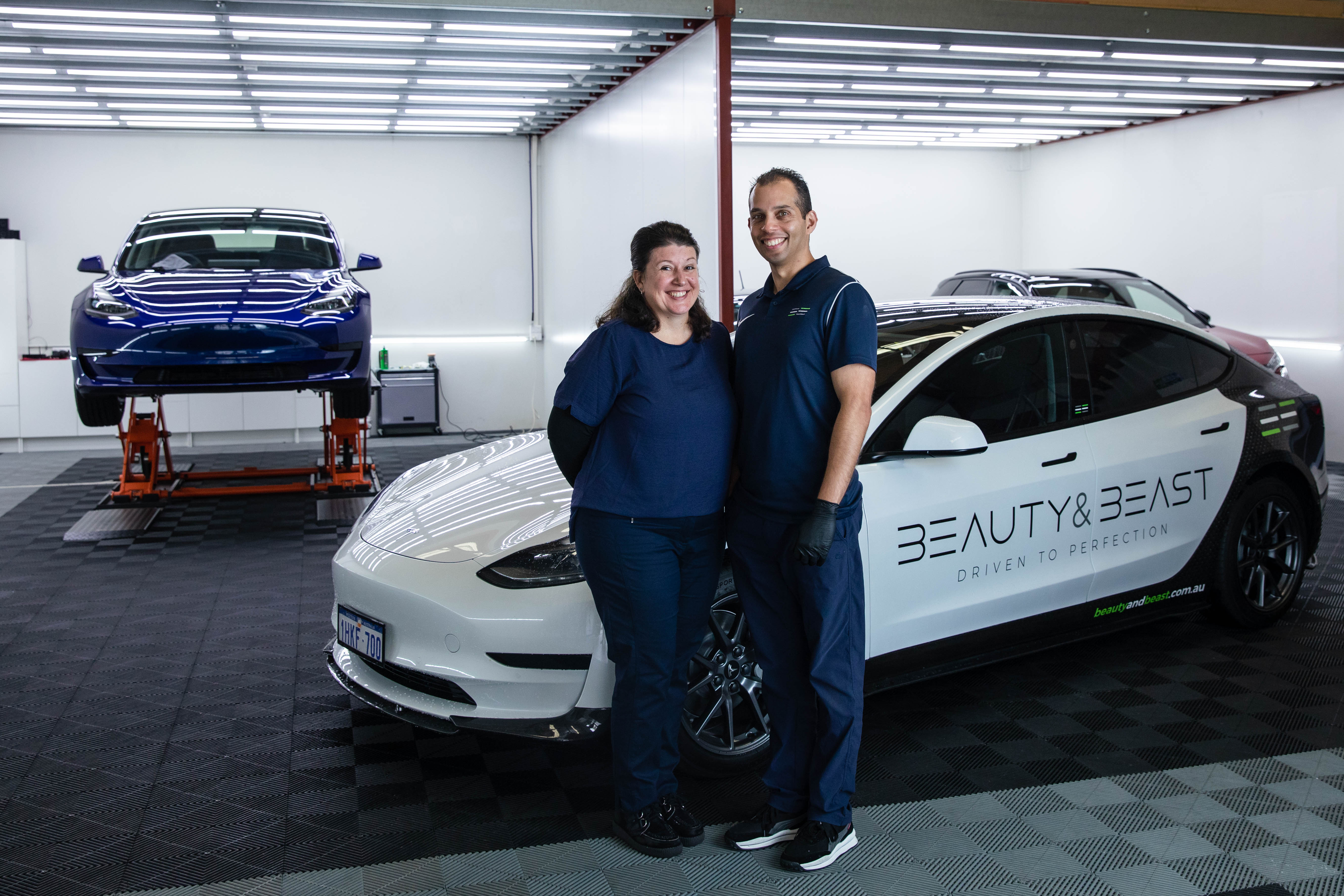
Why we focus on premium ceramic film.
At Beauty & Beast, window tinting sits alongside our Paint Protection Film, ceramic coating and interior protection services.
Our focus is therefore not simply on making glass darker. We want the film to complement the overall level of vehicle protection we provide.
Premium ceramic film allows us to prioritise solar performance, optical clarity, UV protection and a refined appearance while selecting a tint level appropriate for the vehicle.
Explore Window Tinting →Five questions worth asking your tint installer.
What exact film are you installing? “Ceramic” or “standard” alone doesn't tell you enough.
What are its published performance specifications? Look beyond tint darkness alone.
What warranty applies? Understand whether the film and installation are supported and what that coverage includes.
What VLT will the finished glass achieve? Existing factory glass affects the final result.
Where will the vehicle be installed? Film quality matters, but preparation and installation environment also contribute to the finished result.
Ceramic Window Tint FAQs.
01 What is ceramic window tint?
Ceramic window tint is an automotive window film that uses ceramic-based technology to provide enhanced solar and infrared performance without relying on a metallic film layer.
02 Is ceramic tint darker than regular tint?
Not necessarily. Ceramic refers to the film technology, while darkness is described by Visible Light Transmission. Ceramic films can be available in a variety of tint levels.
03 Does ceramic window tint keep a car cooler?
Premium ceramic films are designed to provide strong solar and infrared performance and can reduce the amount of solar energy entering through the glass. The level of performance varies according to the particular film and glazing combination.
04 Does ceramic tint interfere with GPS or mobile signals?
Quality non-metallic ceramic films are designed without metallic layers, avoiding the electronic signal interference that can occur with some metal-containing window films.
05 Does darker ceramic tint reject more heat?
Not automatically. VLT describes how much visible light passes through the filmed glass. Solar performance should be assessed using the film's actual performance specifications rather than darkness alone.
06 Can ceramic film be installed over factory privacy glass?
In many vehicles, an appropriate automotive window film can be applied to factory privacy glass. The existing glass must be considered because it affects the final VLT and overall result.
07 Is ceramic window tint worth the extra cost?
If solar performance, cabin comfort, optical clarity and a premium long-term result are priorities, the added cost of a quality ceramic film can make sense. If the main objective is simply appearance or privacy, other film options may also meet that goal.
08 What ceramic tint should I choose for my vehicle?
The appropriate film depends on the vehicle's existing glass, desired tint level, applicable requirements and whether your priorities are heat management, privacy, UV protection, appearance or a combination of these.
Ceramic tint isn't just about darker glass.
Ceramic window film uses advanced film technology to provide enhanced solar performance without relying on metallic layers. For vehicle owners prioritising heat management, clarity, connectivity and premium performance, it is often the more compelling option.
But the word “ceramic” should not be treated as a guarantee that every film performs the same way.
Compare the actual product specifications, consider the vehicle's existing glass and choose the film that best suits the way you use your vehicle.
